Origins
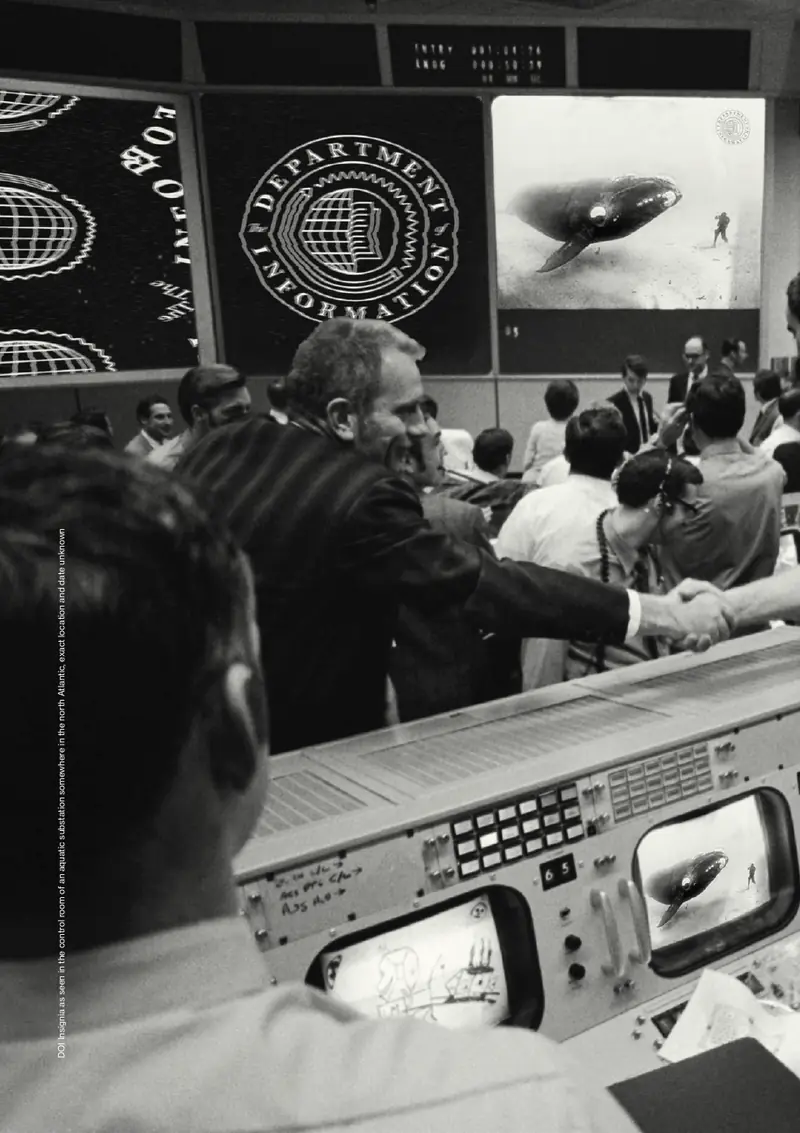
The seal takes its cue from 1960s-era U.S. federal government logos. Stripped of color and of any trappings of modern logotypes, such as a need for popular appeal, those logos were serious, bureaucratic, and often poorly designed by today’s standards.
The Department’s goals remain broad, but dissemination of information is critical to the core mission. So the seal carries a radio-wave line transmitting energy and information across the globe, indicating the organization’s capabilities and minimum intentions; a pencil, for creativity and active participation in the information space; and an open book, signaling readiness to act as a repository for public knowledge.
Colorways
When possible, the seal is Manila or white on Department Black. The secondary application is the inverse.
In rare cases it may be acceptable to use the white seal on Beaurocracy Blue. While acceptable, it should almost never be necessary to use Manila on Embargo Red.
Download SVG: Manila · Department Black · White



Clear space
The seal needs clear space on all sides equal to the radius of the core globe. Nothing else enters that zone: no type, no edges, no other marks.
Sizing
The smallest application must still be readable to the naked eye. The seals below are drawn at their real size in millimetres, so they are true to scale on most screens at 100% zoom.
| The smallest acceptable application. Useful on small physical items like business cards or postage stamps. | 14mm | |
| 22mm | |
| 35mm | |
| Above 35mm, use the seal sparingly and thoughtfully: digital and virtual mediums as appropriate, posters and public notices, event banners, public service billboards, campus signage, uniforms and clothing, vehicle decals. | 35mm+ |
On screen, the seal keeps the readability and clear space of physical use but has no fixed size limits. Below about 64px wide, use the simplified mark instead.
Unacceptable usage
Use the seal in Manila, white or Department Black, on the backgrounds shown under Colorways.
Recolor it, fade it, or set it in a pairing with too little contrast. Never redraw, stretch or rotate it.